The Technological Singularity
This is a very lightly edited translation of a piece I wrote in 2017 for conec magazine.
Fasten your belts, curves ahead: the world is going to change spectacularly, and we humans as we understand ourselves today are going to become obsolete.
Singularity: A point at which a function takes an infinite value.
Technological Singularity: Point after which a technological civilization progresses with such an acceleration that it makes it impossible to predict its consequences.
The world as we know it is about to change until it looks unrecognizable. It is not only the revolution that comes with a new technology, but something much bigger: the concentration of revolutions at such a pace that we humans can't assimilate it. The technological singularity.
That's the opinion shared by many of the people working at the frontier of technology, and this is the story of its arrival.
Technological Revolutions
It is hard to imagine a time when we had no smartphones to communicate with anyone at any time, or a time when we could not connect to the internet to search for information. And yet, such past is very recent.
Technological revolutions used to come more spaced. In the 1830s, thanks to electricity, the invention of telegraphy brought a social and economic revolution, and since then 70 more years had to pass until the telephone and the radio would shake everything again. Then, only about 40 years until the arrival of TV. Computers, networks, internet, smartphones... each significant step has arrived faster.
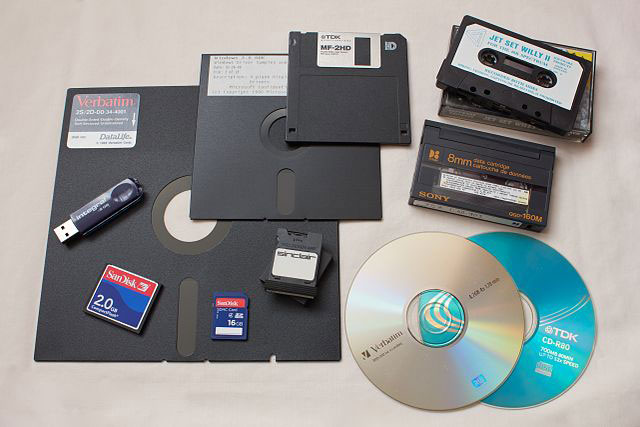
From the giant 8” disk to the small microSD memory, 30 years have passed. The microSD contains about a million times more information than the disk.
Have you heard about Moore's Law? The number of transistors in a chip doubles in about two years (and their power with them), as observed in the 60s by Gordon Moore, cofounder of Intel. But this is just an example of many similar phenomena. Despite the fact that advances seem to arrive randomly, the general behavior looks so predictable that some people like Ray Kurzweil refer to it as a law, the law of accelerated returns. If it continues like this, there will be a day when we have revolutions at a pace as hectic as from one day to the next. A day when we won't be able to “stay updated” anymore and the life of humans, such as we know it, won't be able to continue.
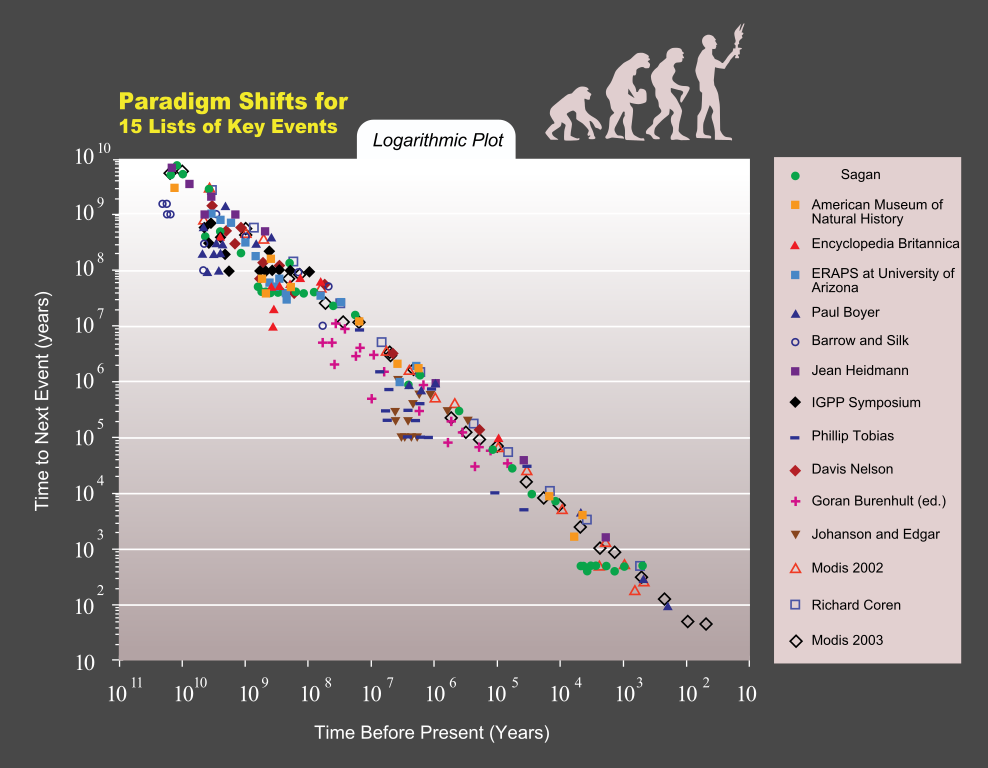
Since the mathematician John von Neumann took it seriously in the 50s, a lot of people have thought about this and refer to that hypothetical moment with the name of technological singularity.
Not everyone thinks that something like this will happen, that the trends will continue to that point. But the experts that do think so expect that it will arrive around 2050, only about 30 years from now.
The Intelligence Explosion
One of the deepest advances has to do with the way we design machines more intelligent every time. Machines that deserve more and more to be described as “thinking”. Artificial Intelligence (AI) is used nowadays for a multitude of complex tasks, from internet searches to autonomous driving cars. Nevertheless, it is still far off from what we consider an intelligent behavior for a human being, a general capacity for problem-solving.
But it doesn't need to be always like this. What we know as general intelligence is a goal that, despite being far away, could be reached surprisingly quickly thanks to the acceleration of technological revolutions.
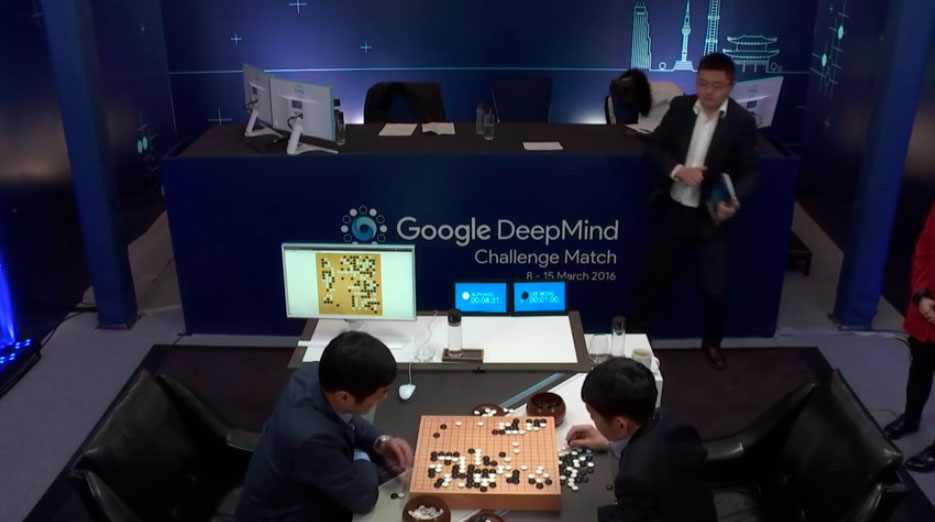
When a few years ago the program AlphaGo defeated world champion Lee Sedol at the advanced game of Go, many recognized the qualitative jump given by artificial intelligence thanks to techniques like deep learning.
Once we create a general AI, it will be able to, among other things, design even better AIs. And those, themselves, others even better. A cycle of explosive augmentation of intelligence that will quickly leave us way behind: the arrival of an “artificial superintelligence”.
For many authors, including Ray Kurzweil and Vernor Vinge, this is what characterizes the singularity. It is the moment when we go to bed being the dominant species in the planet to wake up discovering that we have become obsolete. It is the end of the human era.
Sounds dangerous? If you think so, you are not alone. People like the physicist Stephen Hawking and the entrepreneur Elon Musk had been warning for quite long that the uncontrolled advance of AI is a serious problem for the future of humanity. Musk even compares it with “summoning the devil”. And to confirm that the subject is no joke, Russian president Vladimir Putin wrote that whoever becomes leader in this area will control the world.
Beyond Humans
What will happen to us when (if) the singularity comes? The AIs could substitute us as the dominant species. But also maybe we'll integrate those AIs into ourselves, becoming beings beyond what we are today.
We could start integrating more technology into our bodies. We do it already in a small scale with prosthesis and pacemakers, and we could get to integrate electronics that in practice we'd control “with our thought”. Thanks to genetic engineering we are also more able to freely manipulate DNA, which opens more and more the door to improve ourselves at the molecular level. Finally, we can use advances in nanotechnology to integrate tiny robots that improve the functions of our organism.
This way in which humanity could become something more, enormously modifying through technology the biological beings that we are, is what is known as transhumanism.
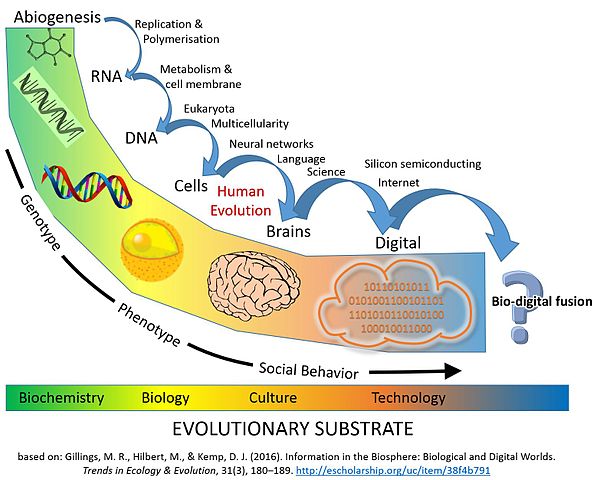
Beyond the singularity, there may be no distinction between human and machine. Thrilling subjects become intertwined. Not only technology will be touched, but also themes like psychology or philosophy. What makes us human? Who are we really? Our answers will likely have little resemblance to the ones we have today.
The Singular Future
Predictions are hard to make (“especially about the future”, as the genius physicist Niels Bohr used to say). It is not clear what will happen with technological revolutions, and it is good to take predictions with a pinch of salt, wherever they come from. But it seems likely that the near future will hold surprises for us that will make the previous great events in the history of humanity look pale by comparison.
If we survive to the big catastrophes that threat our species, like the possibility of a nuclear war or the devastation of the planet due to global warming, we could expect a very, very special future. A point in the evolution as has never happened before in our planet. A time that many of the ones that are alive today will see. Maybe terrifying, maybe hopeful, but without any doubt exciting: the technological singularity.